Moroccan Eid al-Adha: A Joyful Holiday for Everyone But the Sheep
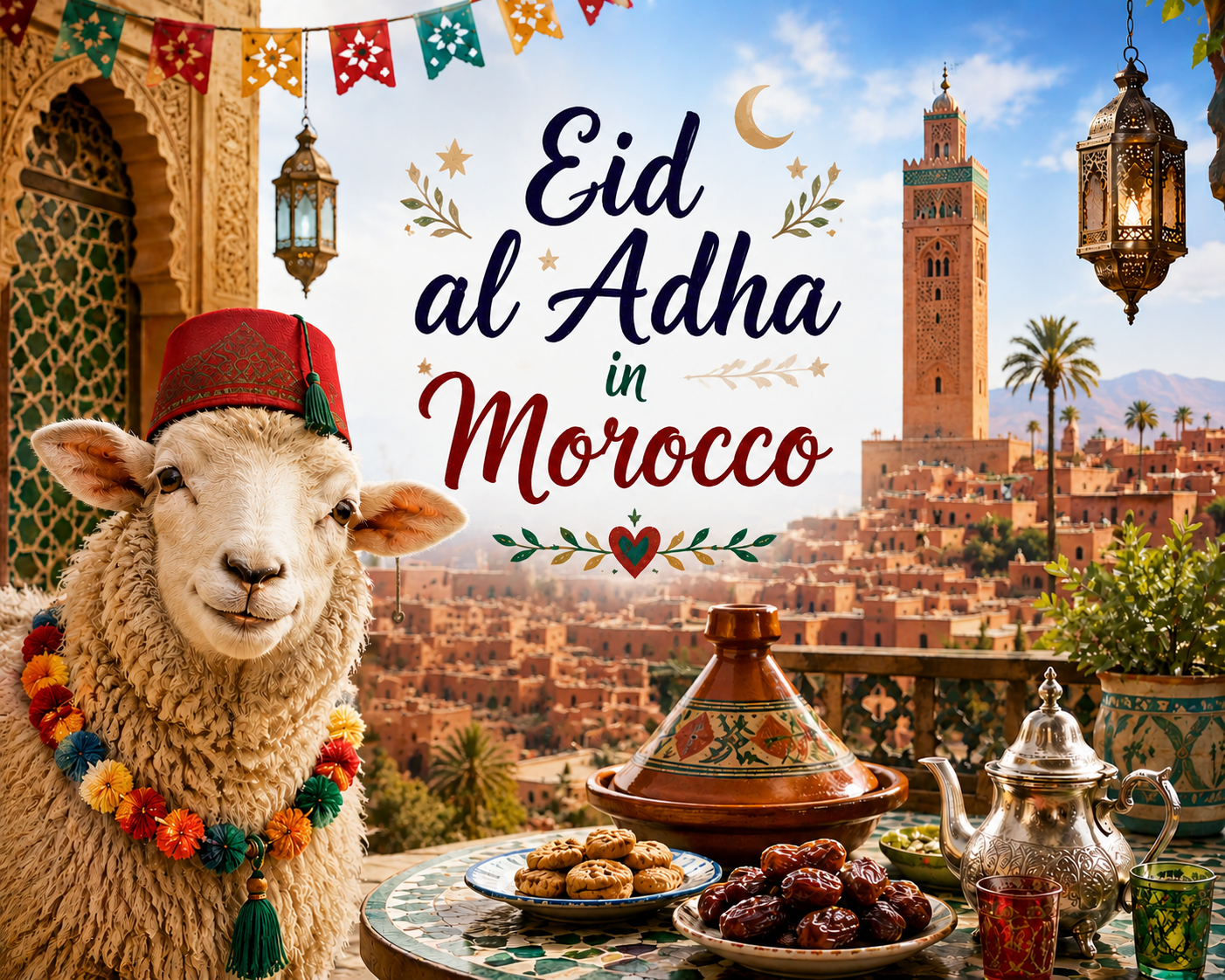
A sheep or goat is customarily the sacrifice for the biggest holiday in Islam.
Foreword: More than 10 years on, Eid al-Adha is such a wonderful experience in Morocco. Each country and diaspora have their own traditions, so enjoy! This blog article was published in September 24, 2015 on National Geographic’s The Plate. I was just starting a US Student Fulbright grant when Eid was upon us in September 2015. (Islamic holidays follow the lunar calendar and have different days each year). While different from the Eid experience in Egypt, I still love this article as a way of giving a glimpse into one of the most important holidays in Islam.
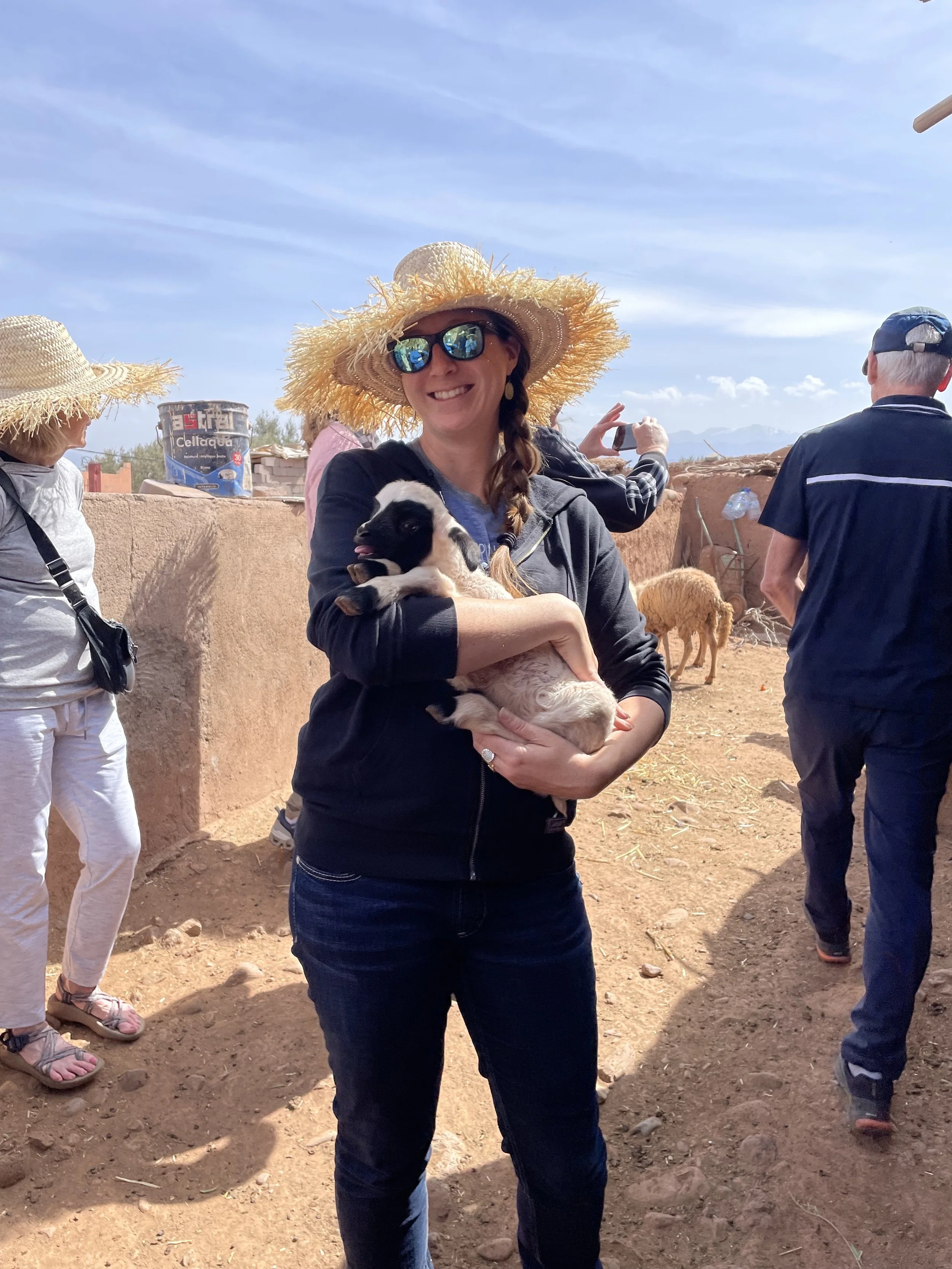
After an 8-year drought and last year’s (2025) cancellation of Eid, the sheep population is bouncing back to provide Morocco with its annual Feast of Sacrifice. Photograph by author.
****
This week, Muslims everywhere celebrate Eid al-Adha, the Feast of Sacrifice, commemorating Abraham’s willingness to sacrifice his son and God’s mercy in allowing him to substitute a ram.
In Morocco, that means thousands of sheep are bought and sold to celebrate one of the biggest and happiest holidays of the Muslim calendar. Think American Thanksgiving plus the spirit of Christmas, and you have the Moroccan Eid al-Adha. Except American Thanksgiving is like a 300-meter dash compared to this marathon feast. I am spending my first Eid al-Adha as an “adopted middle child” with my Moroccan host family, and so far, I’ve been advised to pace myself.
While the Eid is usually one day, families stretch the holiday out for three to five days, preparing and eating various parts of the sheep and washing it down with the hot and sweet Moroccan mint tea. Fireworks, shopping for the perfect sheep, purchasing new clothes for children, and some days of fasting lead up to the ultimate mutton-eating contest.
In the old city, families transport their sheep via motorcycle, in rickshaws, or in the trunk of the car. They keep their live sheep on the terraces and rooftops, feeding and watering them and hearing their bleats daily as the countdown begins. When Thursday comes, it will be silence of the lambs.
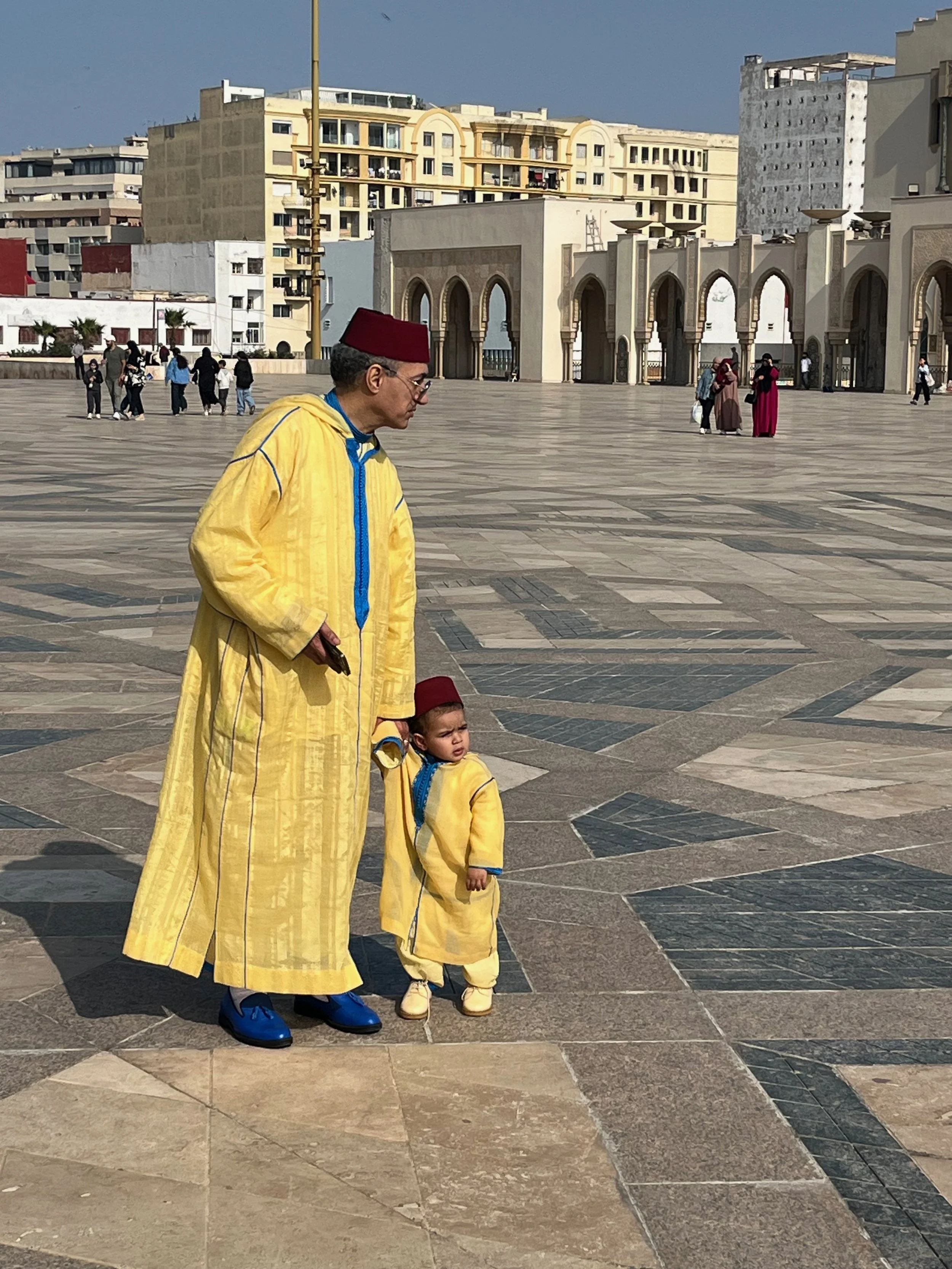
A grandfather and grandson wear matching djellabas to celebrate the Eid. Photo by author.
Eid al-Adha morning starts with a prayer and a small sermon about the religious meaning of the celebration, much like a Christmas Eve service. Part of the celebration of the eid is charity: the meat is divided into thirds, a third for the family, a third for friends and relatives, and a third to those in need or unable to afford meat.
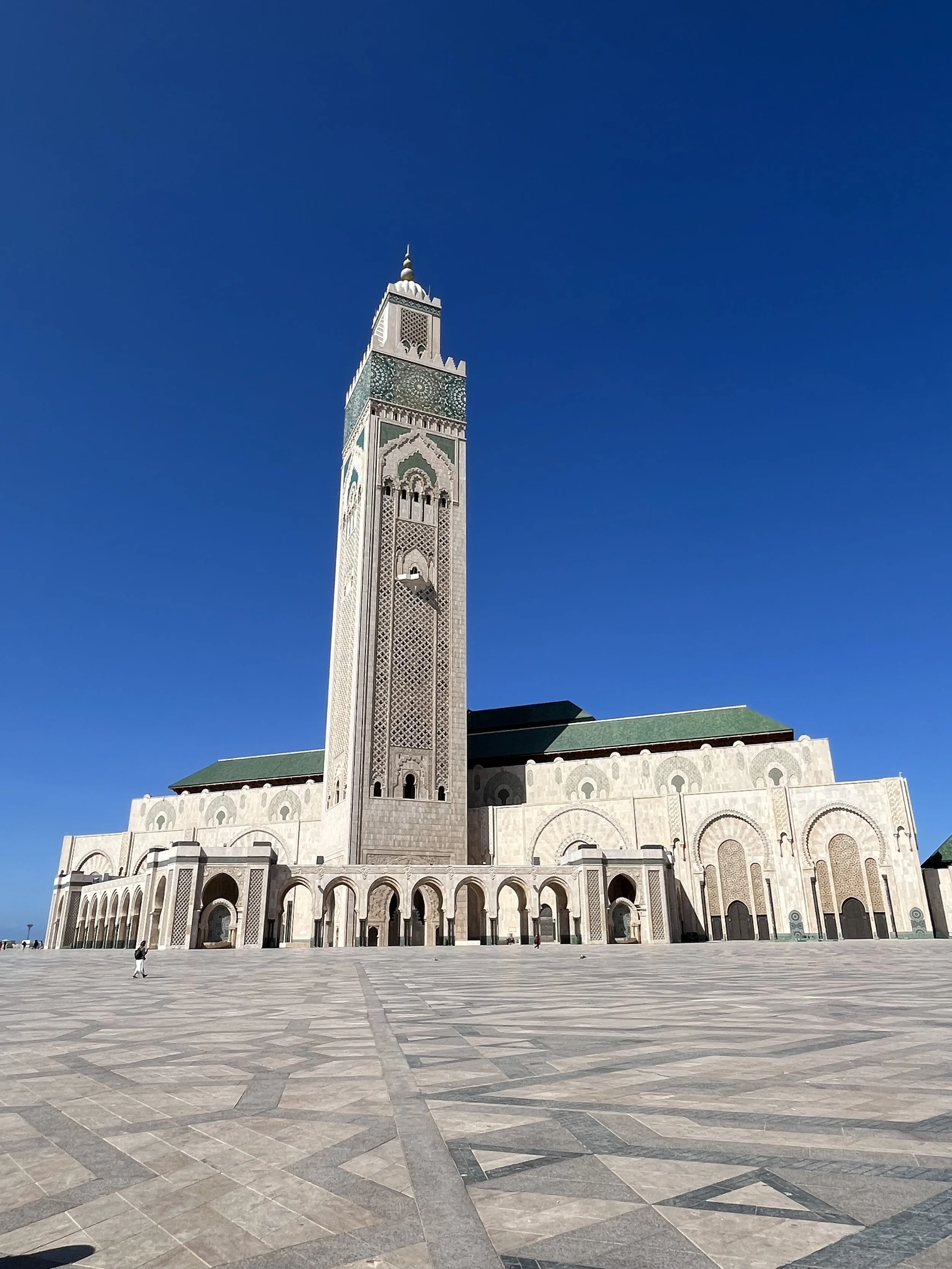
The plaza around the Hassan II mosque in Casablanca is usually filled to overflowing with congregants for morning Eid prayers. Photography by author.
After the prayer and breakfast, the family gathers for the commemorative sacrifice of the sheep. Usually the oldest man in the family along with the help of a local butcher, slaughters the sheep halal style, as family and children look on with anticipation. Within 20 minutes, the butcher guts, divides, and organizes the meat into its respective cuts, and goes on his way to the next household. Men drive around collecting sheepskin to sell to tanneries. Smiles are seen everywhere in the street during the holiday.
Moroccans traditionally eat many parts of the sheep, creating special dishes for this occasion. The first meal is typically boulfaf. It is the major organs, namely the liver, lungs, heart, and kidneys, marinated in paprika, cumin, garlic, and parsley, and then, skewered and barbecued over a charcoal fire. The fat adds some crispy texture and flavor to the iron rich dish, which can be eaten on its own with a salad or thrown into a sandwich with onions, olives, and tomatoes. And this is just lunch.
Take a quick nap and prepping the stomach for dinner is the next task. Douara is a savory, stew-like dish made of the stomach and intestines. Because cleaning the stomach and intestines is time-consuming, this dish is losing its popularity, but is a staple of eid nonetheless. The afternoon is also filled with family and friends, knocking on doors, wishing people a happy eid. Guests are served Moroccan pastries made with almonds and peanuts and piping-hot sweet mint tea.
The next morning is spent boiling the head of the sheep for the delicate and tastiest meat. Many people take out the brain, boil it separately, and serve it with a tomato sauce, a mixture of spices, and eggs. The rest of the head is cooked and served with vegetables in a sauce. Some of the older generation considers the eyes and the tongue delicacies. There are even traditional dishes for the feet, shoulders, and testicles—Rocky Atlas Mountain Oysters anyone?
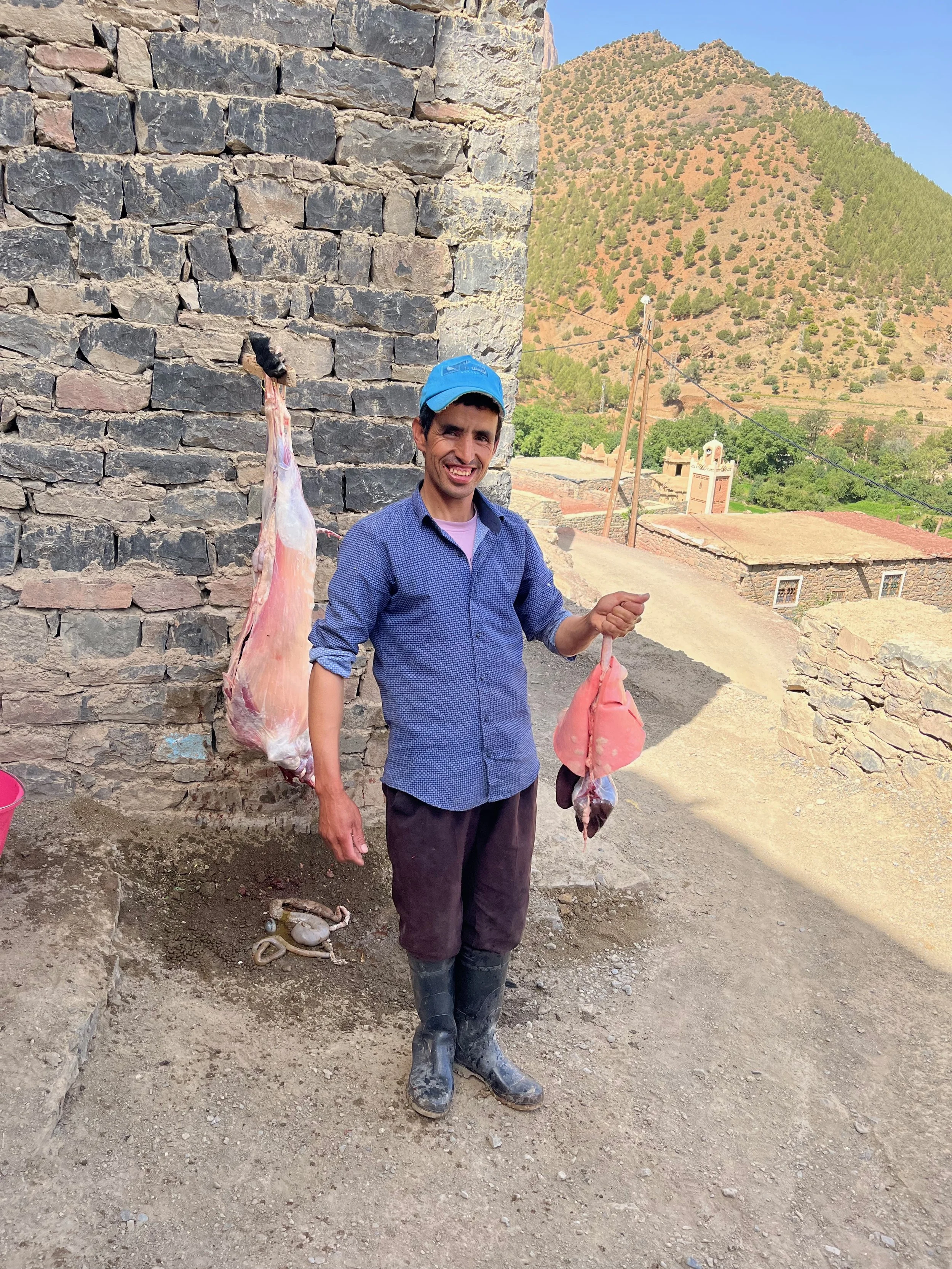
Checking out the lungs to make sure they are okay to eat. Photograph by author.
But enough about the offal. The kebab (thick cuts of fillet), the kefta (minced meat with spices), and the mechoui (the pièce de résistance—slow roasted leg or shoulder) are the coveted cuts of meat. My host brother, Marouane, licks his lips in anticipation while my mouth waters at the smell of the meat grilling over the charcoal flames. Even after a day and a half of eating, I can still find room for another mouthful as my host mother orders me to “Kuli, kuli!” or “Eat, eat!” I know I will only want a piece of lettuce for the rest of the week, but I cannot resist.
At the end, roll me out the door like the blueberry girl in Willy Wonka’s candy factory.
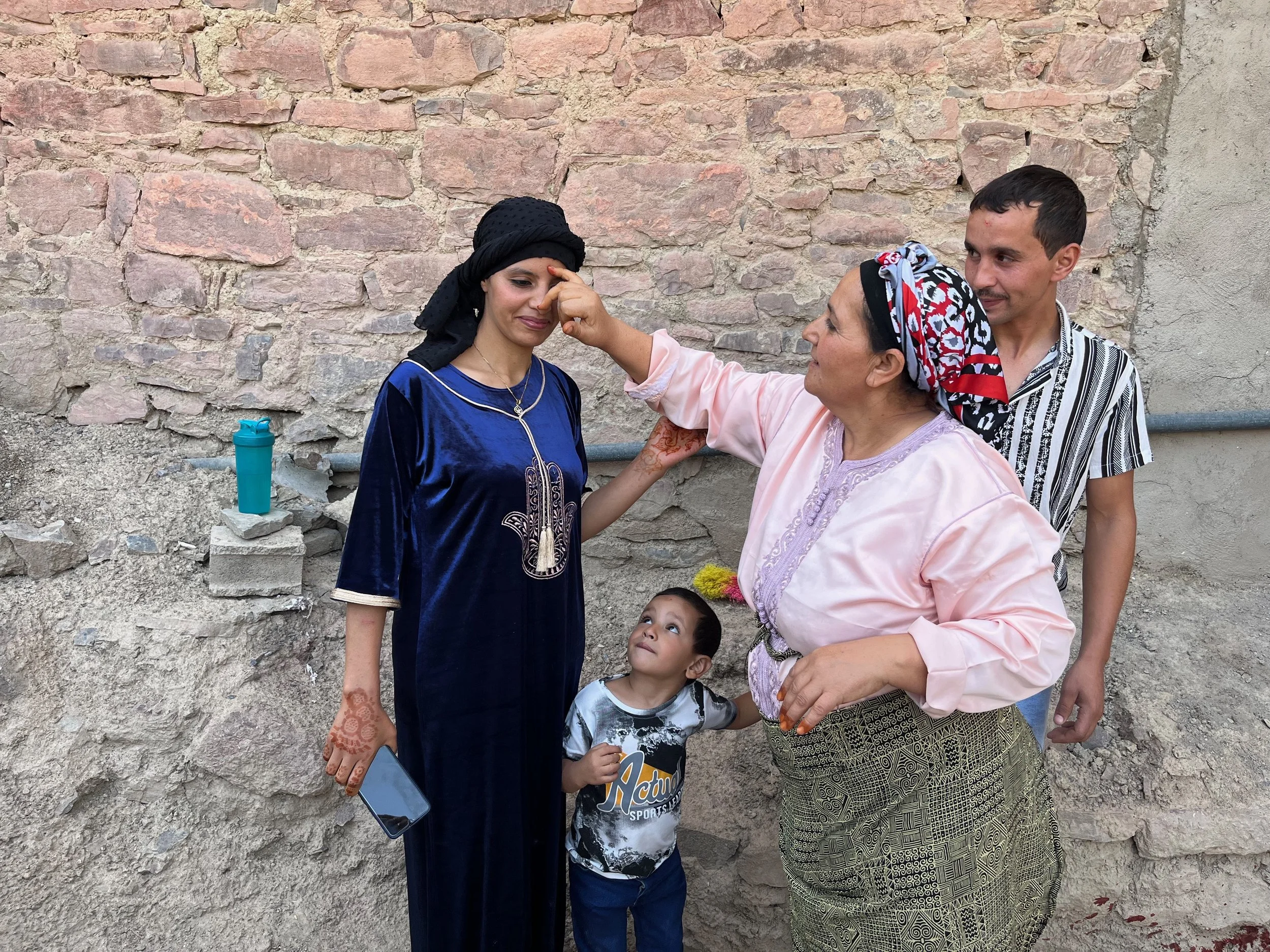
While not proscribed by Islam, anointing the family with a drop of the animal’s blood is often seen in the rural areas.
Kids are often acclimatized to seeing the slaughter from a young age and often help with the cleaning of the carcase and preparing the meals. Photograph by author.