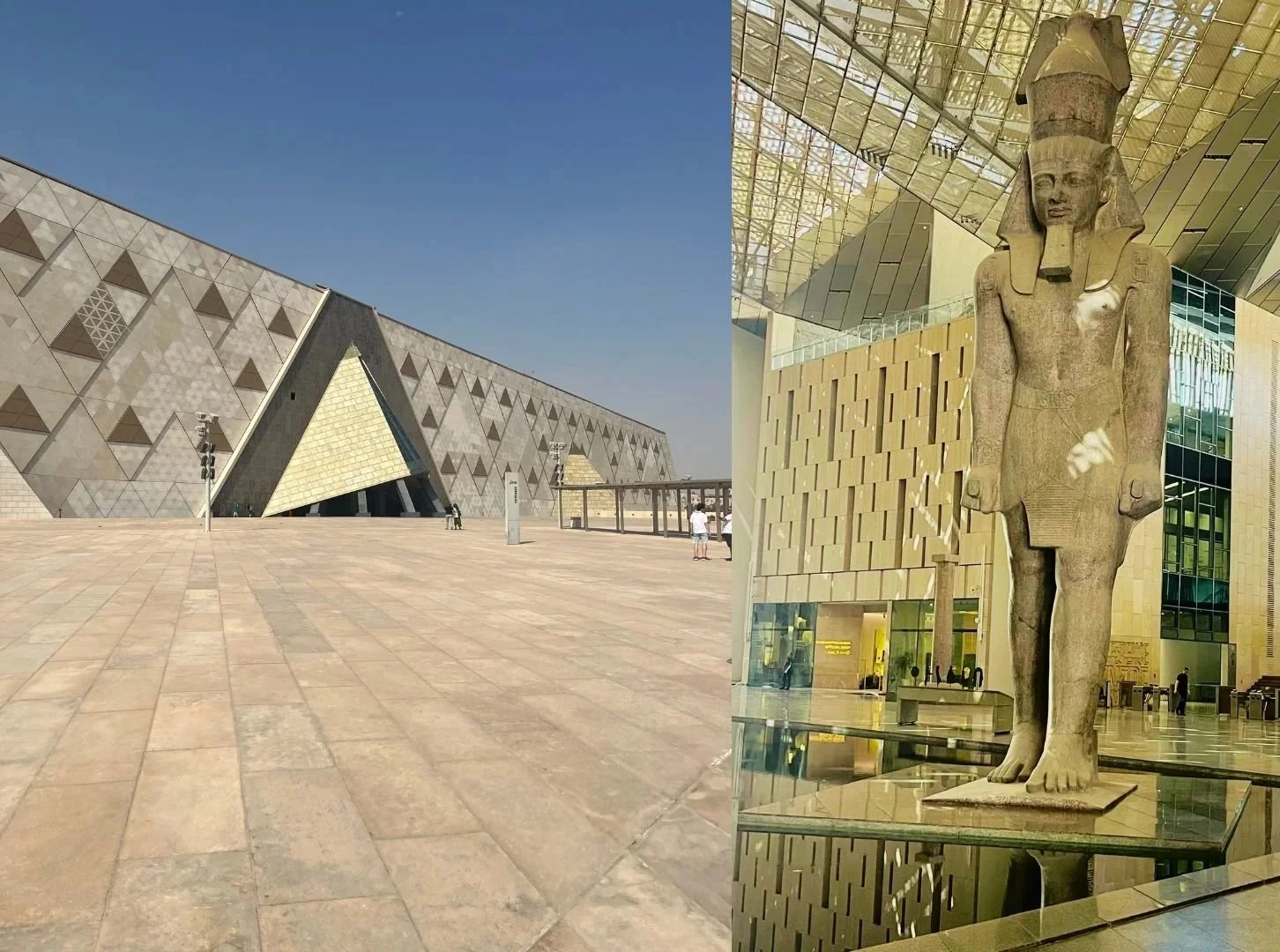
The Grand Egyptian Museum from outside. On the right, the statue of Ramses the Great in the Grand Hall of the GEM (2026).
With 12 galleries, a separate museum for 2 boats, and ALL of King Tut’s treasures in one space, how do you decide what to see before getting museum-fatigued or running out of time? This is the list for you!
What to see:
Whenever visitors go to the Grand Egyptian Museum, they struggle to grasp how large the museum is and how much time it will take. It is sometimes made easier if you are on a tour of Egypt with a guide you’ve been with for a few days. You can also request a guide or join a larger timed tour when you buy your ticket at the entrance. The museum does offer audio guides – but I don’t recommend them – the GEM requires having a storyteller or someone who can bring artifacts to life. This is a post I’ve wanted to write for some time and the anniversary of the Grand Egyptian Museum, I felt compelled to finally complete the list!
#10 Wig Made of Human Hair
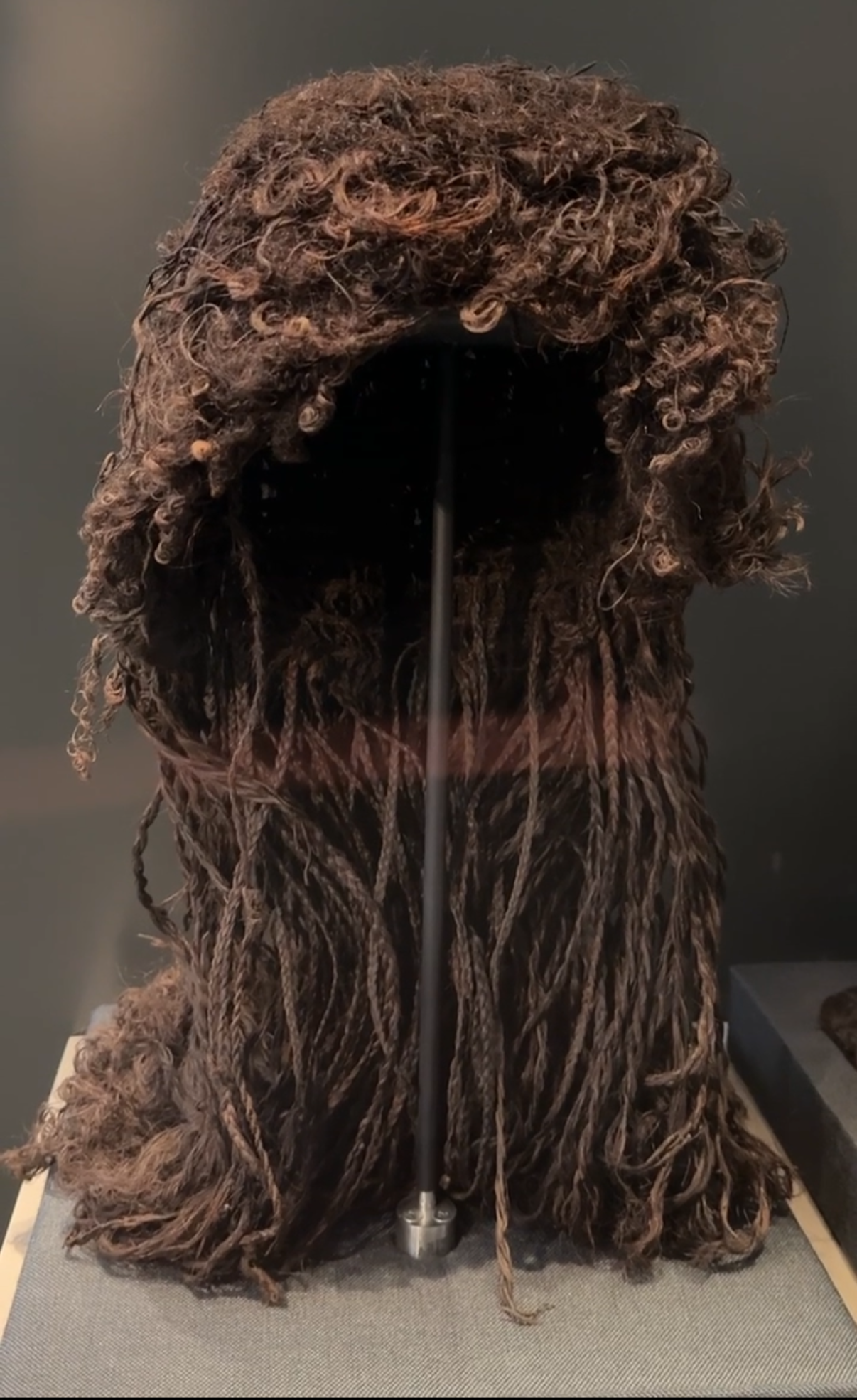
Human hair wig on display at the GEM (2026).
While this artifact might look like what we ladies clean our shower drains, this is an amazing piece that is kept in the adornment area. Wigs were a part of dress in Ancient Egypt. Most Egyptians shaved or cropped their hair as a way of dealing with the heat. They were also pre-germ theory germaphobes and kept themselves remarkably clean to avoid lice. Both men and women wore wigs and for women, like then as now, long hair was indicative of fertility and sexuality.
Those who could afford it and were of a particular class would have worn wigs made of human hair, while those who were not aristocracy would have worn wigs made of other materials including animal hair and plant fibers. To create a high-quality wig, it would have taken 200 hours or more to create and style the hair.
Often in art, the wearer would have beeswax cones that held perfume attached to the top of the wig which would melt with the heat of the body and the day and keep the person deodorized throughout the day. The cones have been found, but their purpose as to perfume is still contested.
To learn more in-depth information about Egyptians and their hairstyles, check out the British Museum’s blog post about Wigs and Hairstyles: https://www.britishmuseum.org/blog/wigs-and-hairstyles-ancient-egypt
#9 Bearded Mummy Masks
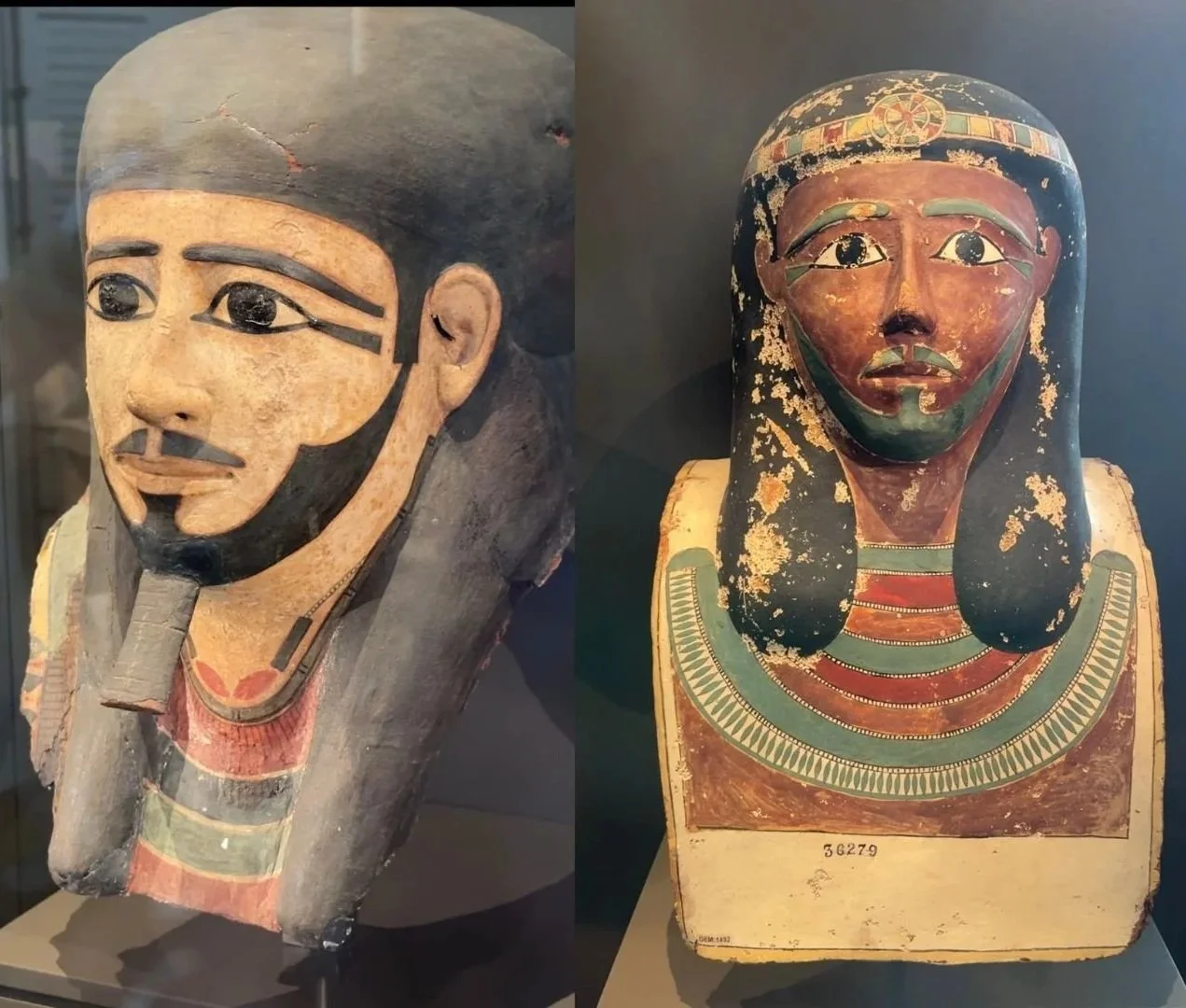
Mummy funerary masks from the Middle Kingdom (2026).
These incredible funerary mask is displayed in the Middle Kingdom portion of the Main Galleries. What I love about these masks are the beards. Few statues, masks, and objects show a person wearing their own facial hair. There is a famous couple statue in the Egyptian Museum in Tahrir where Prince Rahotep* is sporting a mustache! Royalty often wore a false beard which symbolized their reign (a straight beard on a statue meant the king was alive while it was sculpted and a curl at the end signified that he was deceased, hence King Tut’s funerary mask and fake beard being curled).
The other interesting bit about these masks are that they are from the Middle Kingdom, which I would say often gets ignored by the popular science media.
*remember his name – he’s related to some other people in this list!
#8 Jewelry Collection
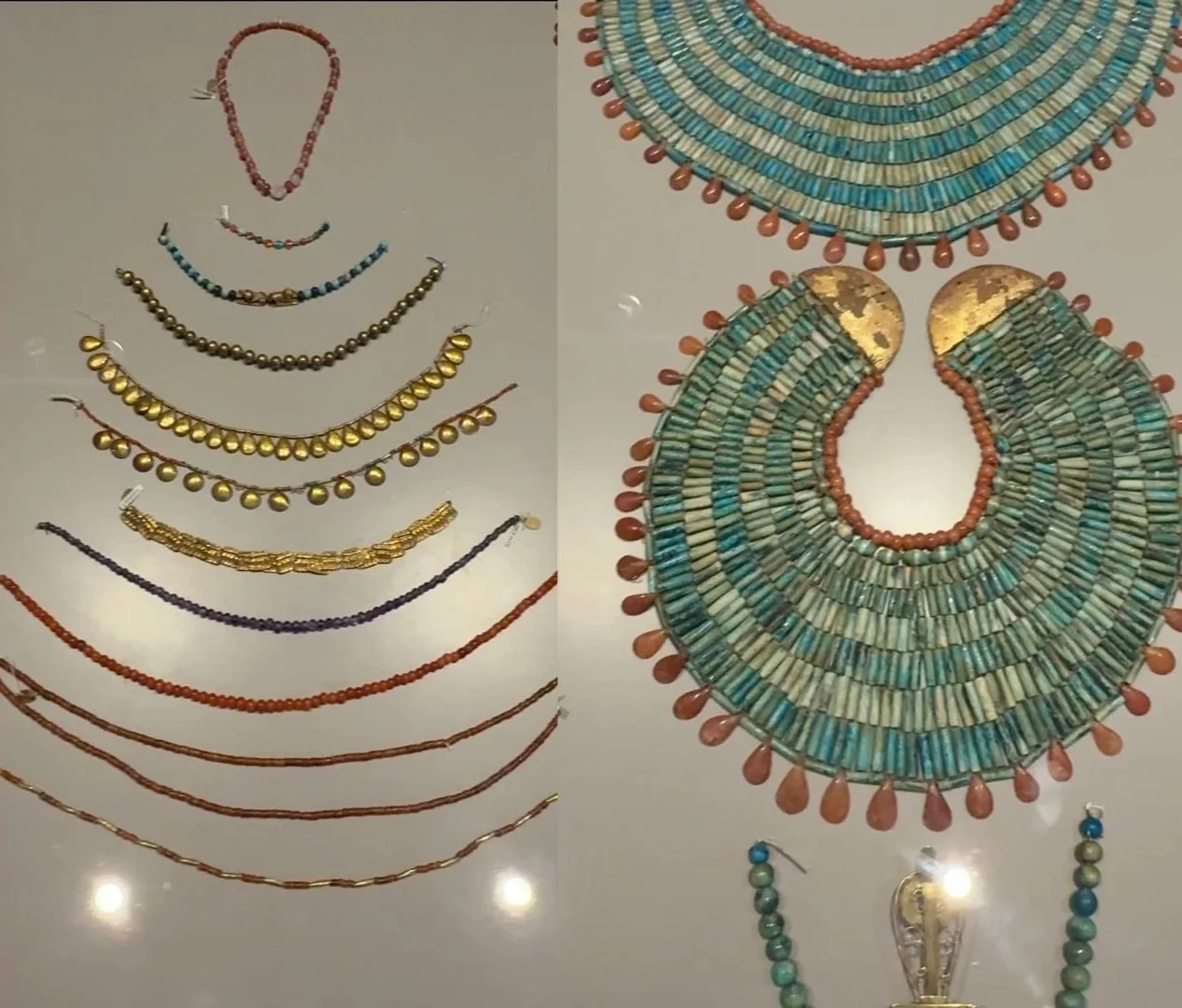
Jewelry on display at the GEM. (2026)
The jewelry collection is something of awe and wonder. While not limited to gold and silver, beads of lapis, turquoise, coral, jasper, feldspar, and amethyst have been found and many strings and arrangements can be appreciated in this exhibit. Royalty and noblepersons had all of these at their disposal, but even peasants would have strings of clay beads to adorn themselves.
Part of the enjoyment of learning about Ancient Egypt is marveling at how they could create such masterworks of stone and granite, but also micro-teeny-tiny bits of jewelry and drill holes for a string to be threaded through and worn.
Be aware this is where a lot of museum attendants hang out because they don’t want you leaning on the glass. To avoid a scolding and mean looks, look with your eyes, not your hands (or weight).
Check out Morgan Moroney’s essay Egyptian Jewelry: A Window into Ancient Culture on the American Research Center in Egypt’s website: https://arce.org/resource/egyptian-jewelry-window-ancient-culture/
#7 Artifacts of the Late Period
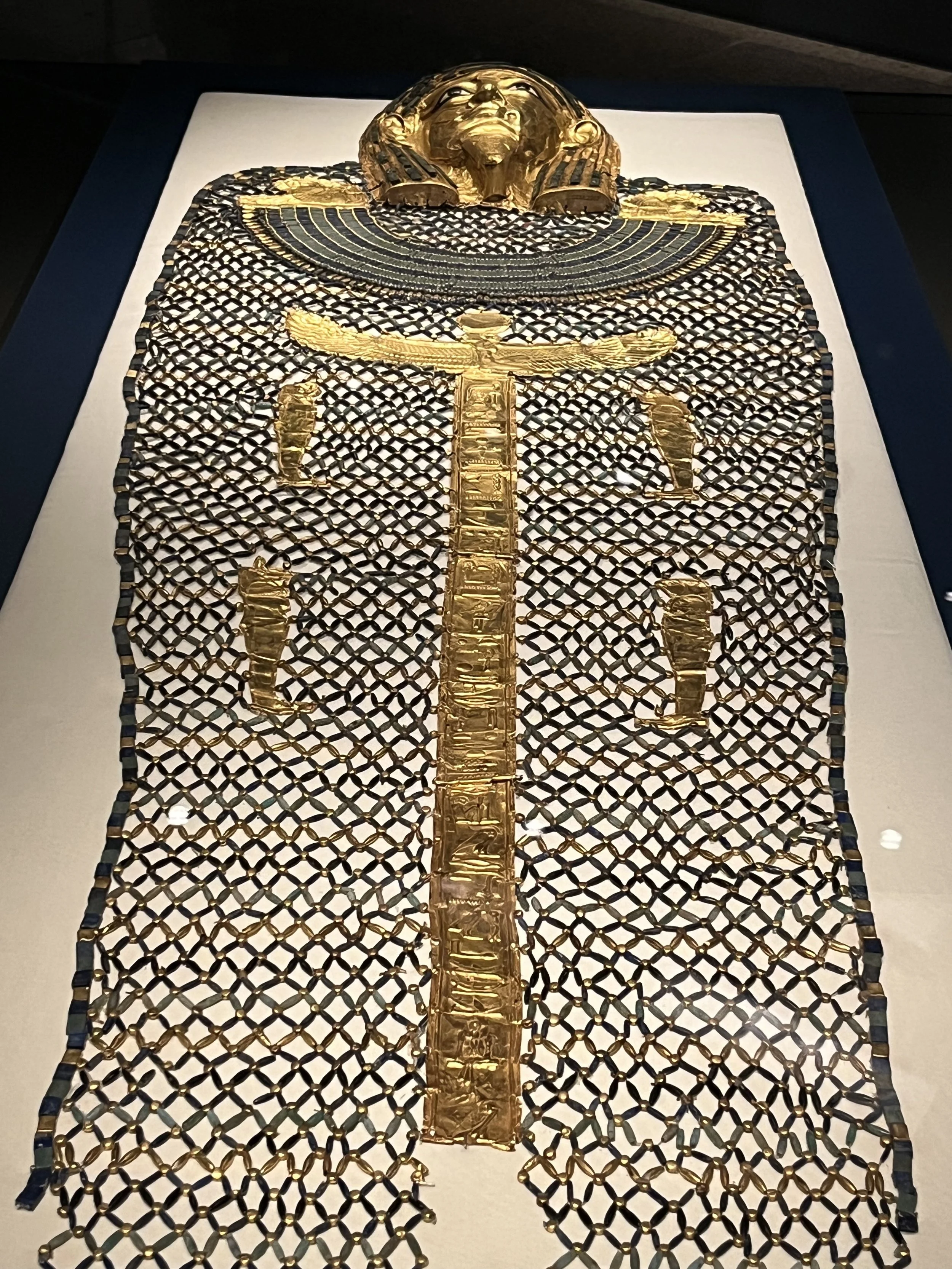
Mummy mask and net on display at the Grand Egyptian Museum (2026).
Before Alexander the Great came to Egypt, became ruler, and Ptolemy appoints himself in charge, kicking off the Greco–Roman period in Egypt – the Late Period had some amazing artifacts. This exhibit shows how art was changing especially in the items left behind. Near the display of animals in Ancient Egypt – there is a display offering a large almost fat sarcophagus of a ruler where he is plump with no neck and a mummy mask with a net. While other mummies have had nets, this one has been rewoven and restored for viewing. The Late Period was a time where Egypt was getting flooded with intruders which were obviously leaving a mark on the art and the imagery being produced. The styles from the Old Kingdom get a revival but are also imbued with new designs.
For more information about the Late Period: Check out this link to the Met’s essay of artifacts: https://www.metmuseum.org/essays/egypt-in-the-late-period-ca-712-332-b-c
#6 Akhenaten and the remnants from Amarna
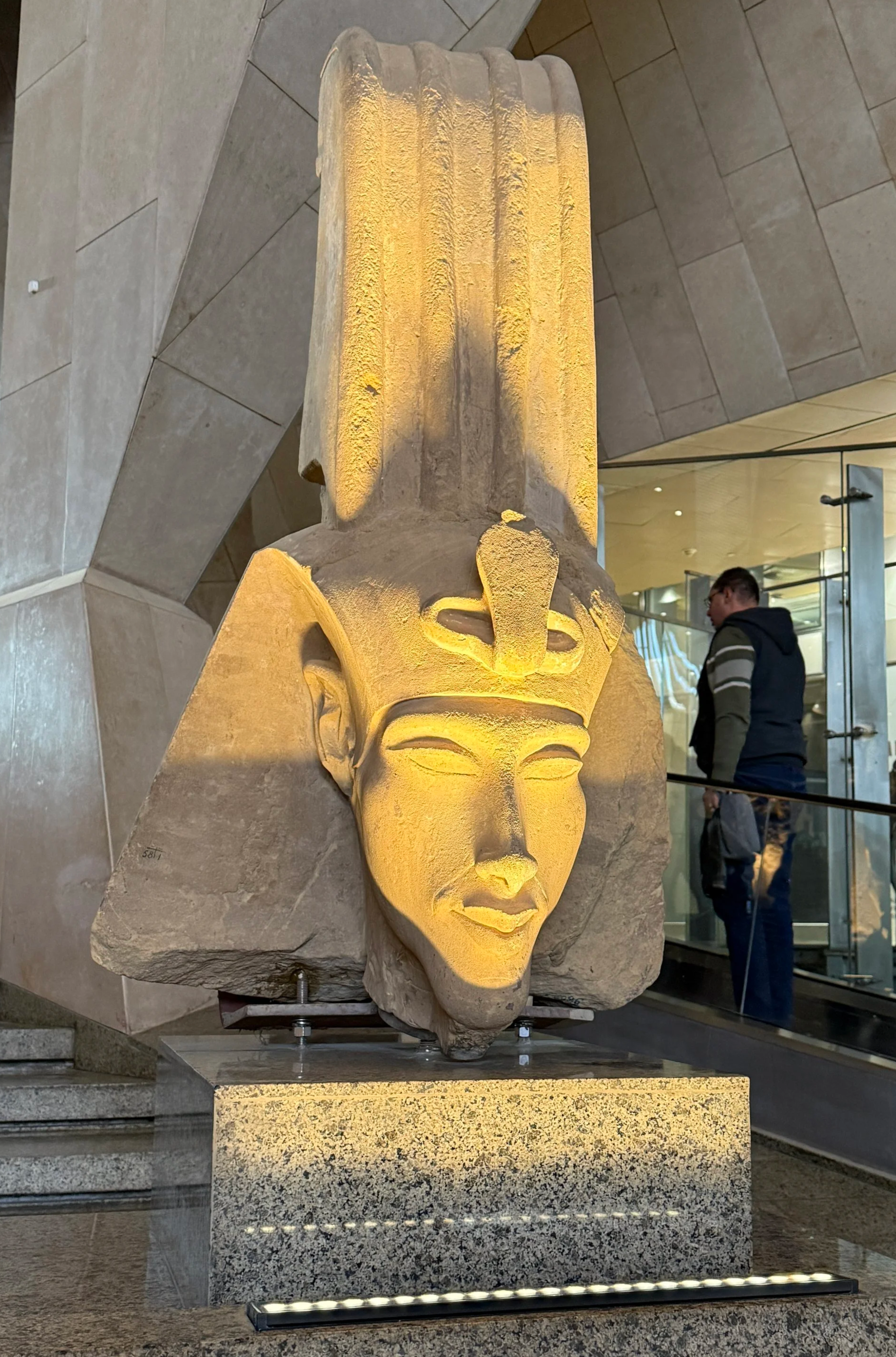
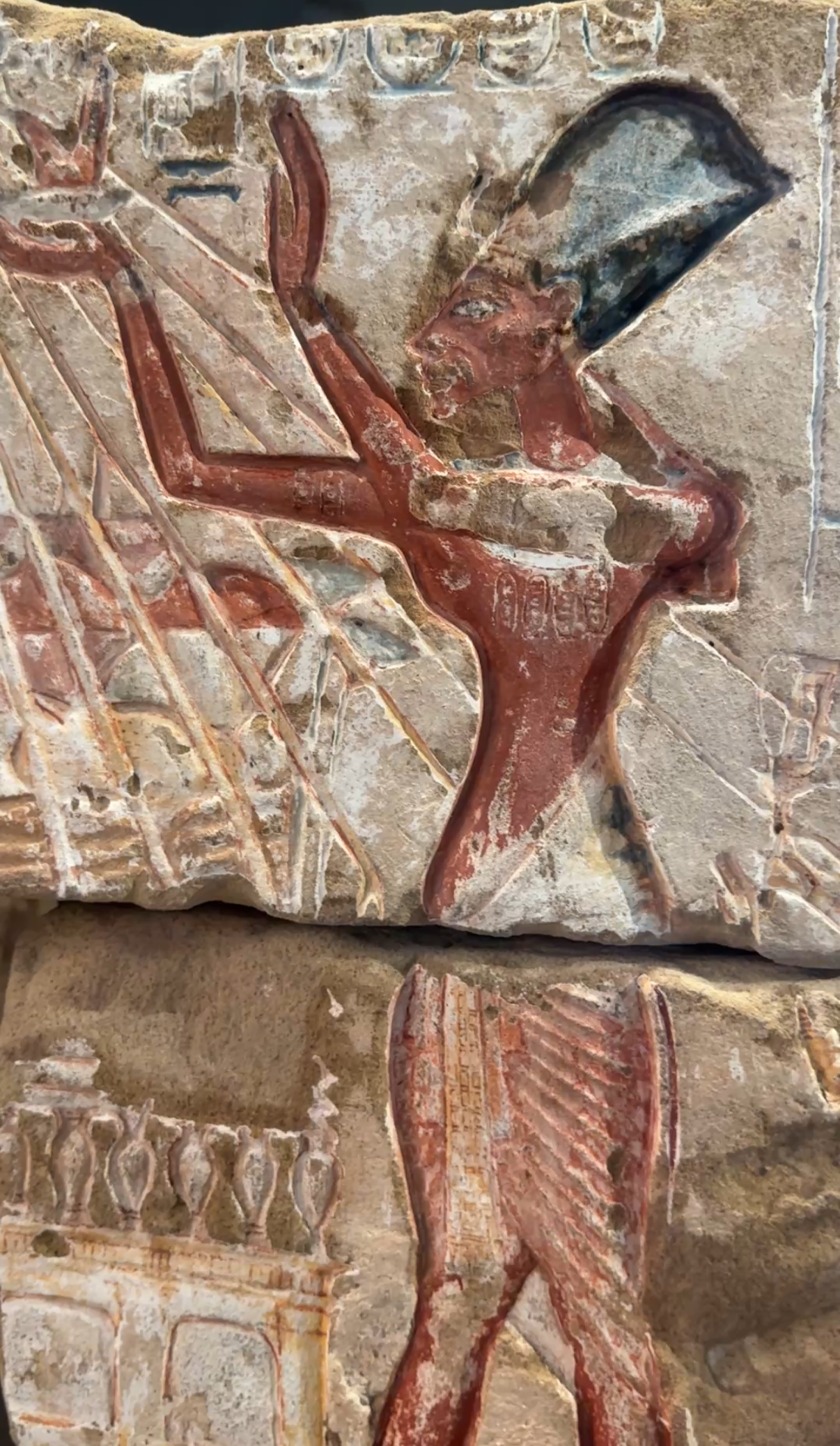
Akhenaten worshiping the sun or the Aten on display at the Grand Egyptian Museum. (2026)
One can NEVER skip over the captivating face of Akhenaten, the heretic king. This was the guy that tried to convert his kingdom into monotheists overnight, subverting the traditional veins of power through religion and funneling it all to himself. Needless to say that didn’t make him super popular, and while we don’t know how he died, we know that after he died, his son or grandson (by father-daughter incest or sibling incest, yikes!) Tutankhamun restored the pantheon of gods. However the stability of the country was on the decline – probably due to all the incest.
That being said, the coolest thing about the Amarna period (named for the place Akhenaten ruled from) is the massive sweeping changes in the art forms. The bulbous bodies, the sucked in face, and the symbolism changes dramatically. Look at any of aten or the sun disks depicted and you will see little hands coming from the rays touching the figure – Akhenaten. While there have been studies trying to figure out why he is depicted this way, there are no definitive results as to why he is portrayed with the feminine features like the hips and sumptuous lips. Might have been a disfigurement or congenital issue or could have been a way of connecting the two aspects of the divine.
#5 Hetepheres’ Bedroom Set, Chair, and Bangles
Many probably don’t hear about Hetepheres, but this is the “Queen of the Pyramid Builders”. She was most likely married to Sneferu who built the Bent Pyramid and the Red Pyramid and gave birth to King Khufu, who built the Great Pyramid of Giza. She’s also mother of the mustachioed man mentioned in #9. While little is known about her life, she had an amazing tomb that was filled to the brim with alabaster jars and pots, yet the coolest thing from the Old Kingdom that she took with her when she died was an incredible gilded bedroom set which included a canopy, a bed, with a headrest and a chair. While the headrest makes my neck hurt to look at it, these are incredible items when we realize they are as old as the massive stone blocks lying next door to the museum (yes the Pyramids). You also see a sedan chair nearby as well as her silver bangles with dragonfly motifs. These are especially rare because silver was considered rarer and more valuable than gold!
While she wasn’t buried in a Queen’s Pyramid (potentially died prior to them being finished) we don’t have her mummy, but we have this amazing display which is right inside the second gallery. You can even see
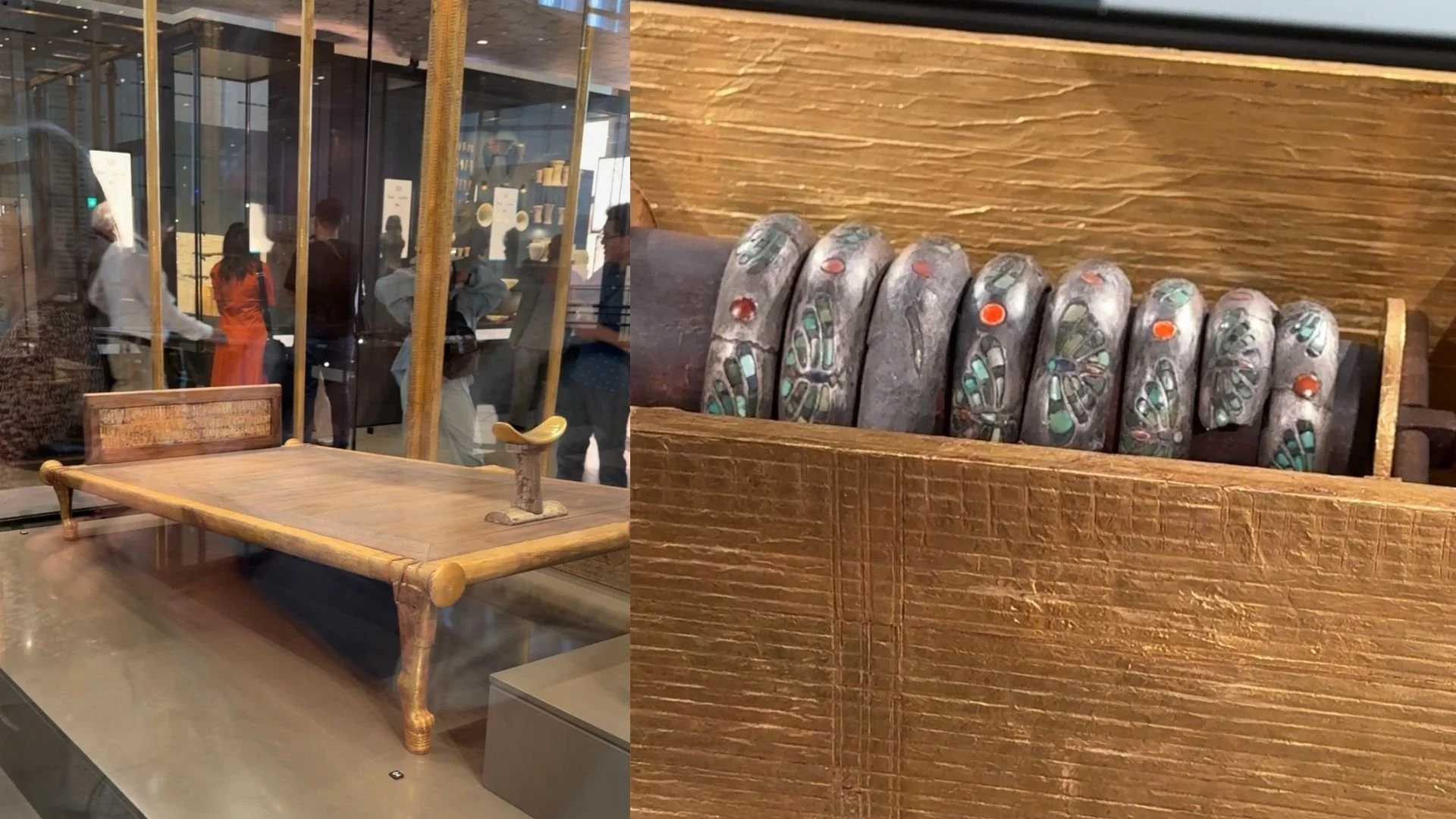
Queen Hetepheres’ bed and neck rest on the left. On the right, her silver bangles with dragonfly motifs. (2026)
#4 The Fountain Display of Hapi and Sekhmet
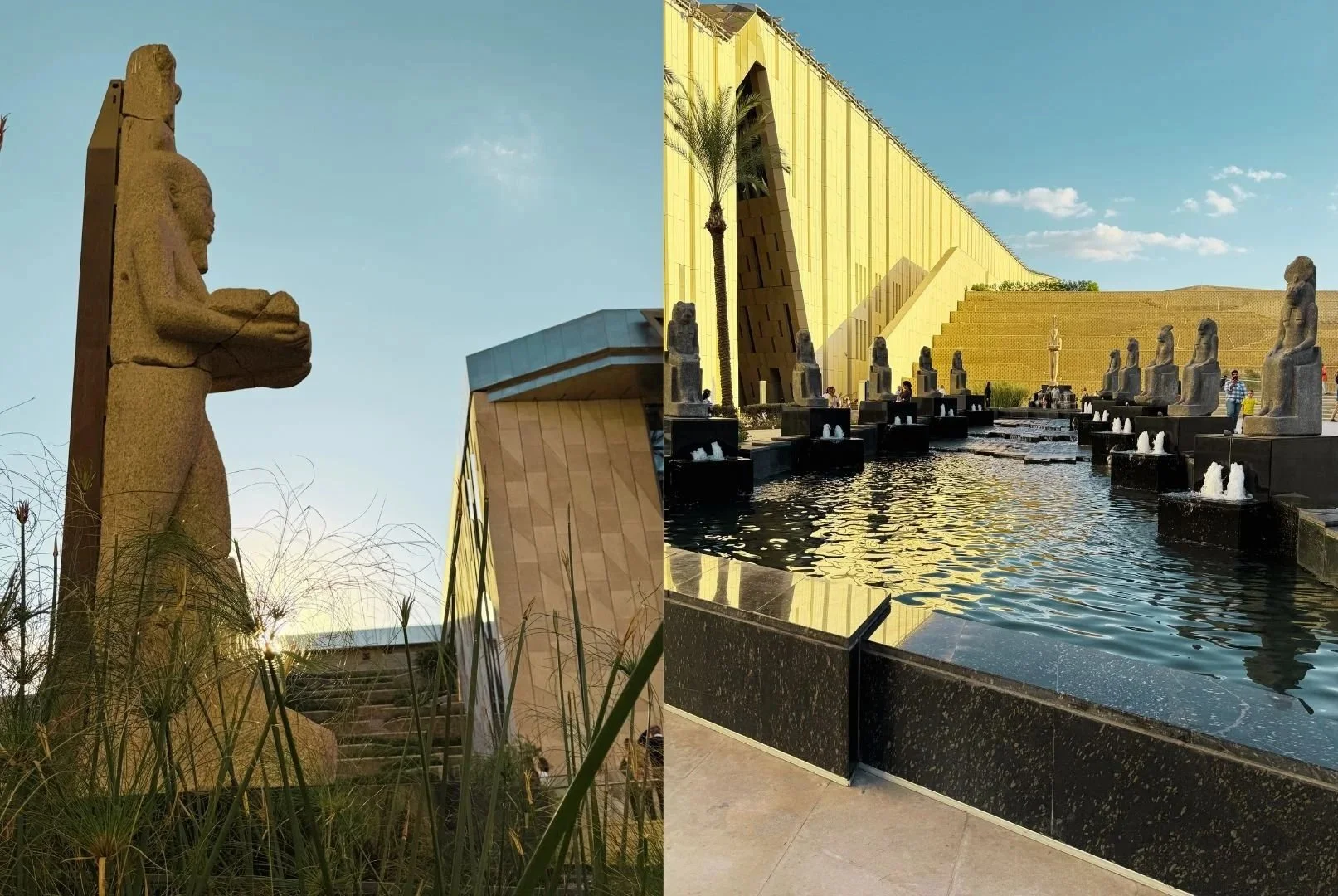
Left, Hapi the Nile god with papyrus plants. Right, the fountain pool guarded by the lion-headed goddess Sekhmet. (2026)
If you go straight through the Grand Hall past the figure of Ramses the Great and the statues discovered in Alexandria’s harbor, you’ll follow the signs to Khufu’s Solar Boat Museum. You’ll go outside and see the statue of the Nile god Hapi and from him flows the water and trickles to a pool surrounded by statues of the lion-headed goddess Sekhmet. What makes this display so beautiful is the planting of the papyrus plant and the lotuses in the garden areas around Hapi. Normally when you see Hapi depicted, he is usually mirrored holding a lotus or papyrus and they are knotted together represent the Lower and Upper parts of Egypt. Here you get to see a papyrus plant in situ, which was almost wiped out in the 1800s from draining, over cultivation of land, and lack of demand. In the 1960s Hassan Ragab imported the same plant from Sudan and reintroduced it to Egypt. While papyrus has since regrown and is used for touristic papyrus souvenirs, you rarely get a chance to see one in Egypt, so take advantage!
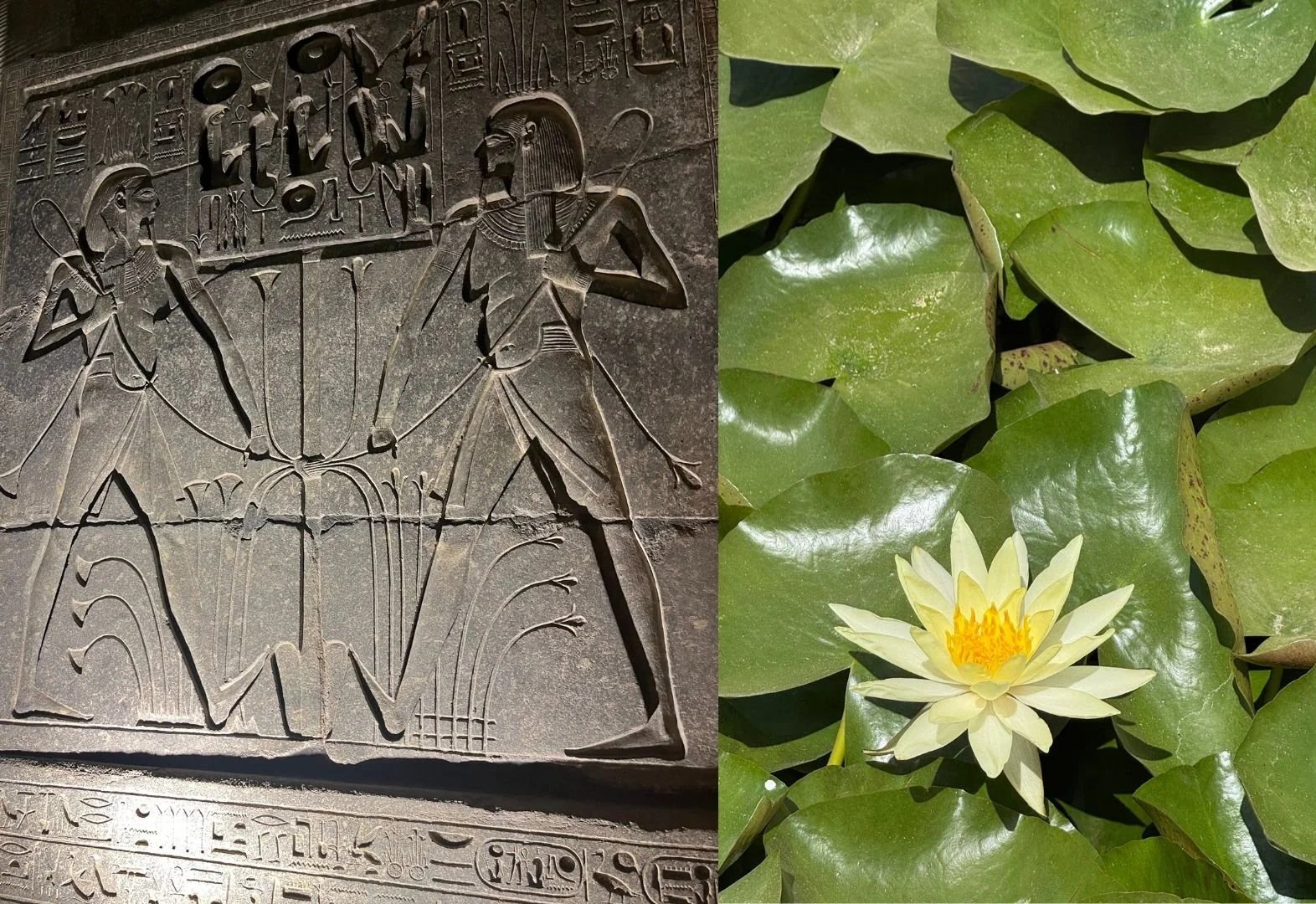
This is one of the few quieter areas to get away from the crowds when needed. However, please be careful not sit on the edges of the pool. An attendant may or may not kindly tell you off, plus they don’t want anyone falling into the pool.
#3 Khufu’s Solar Boat Museum
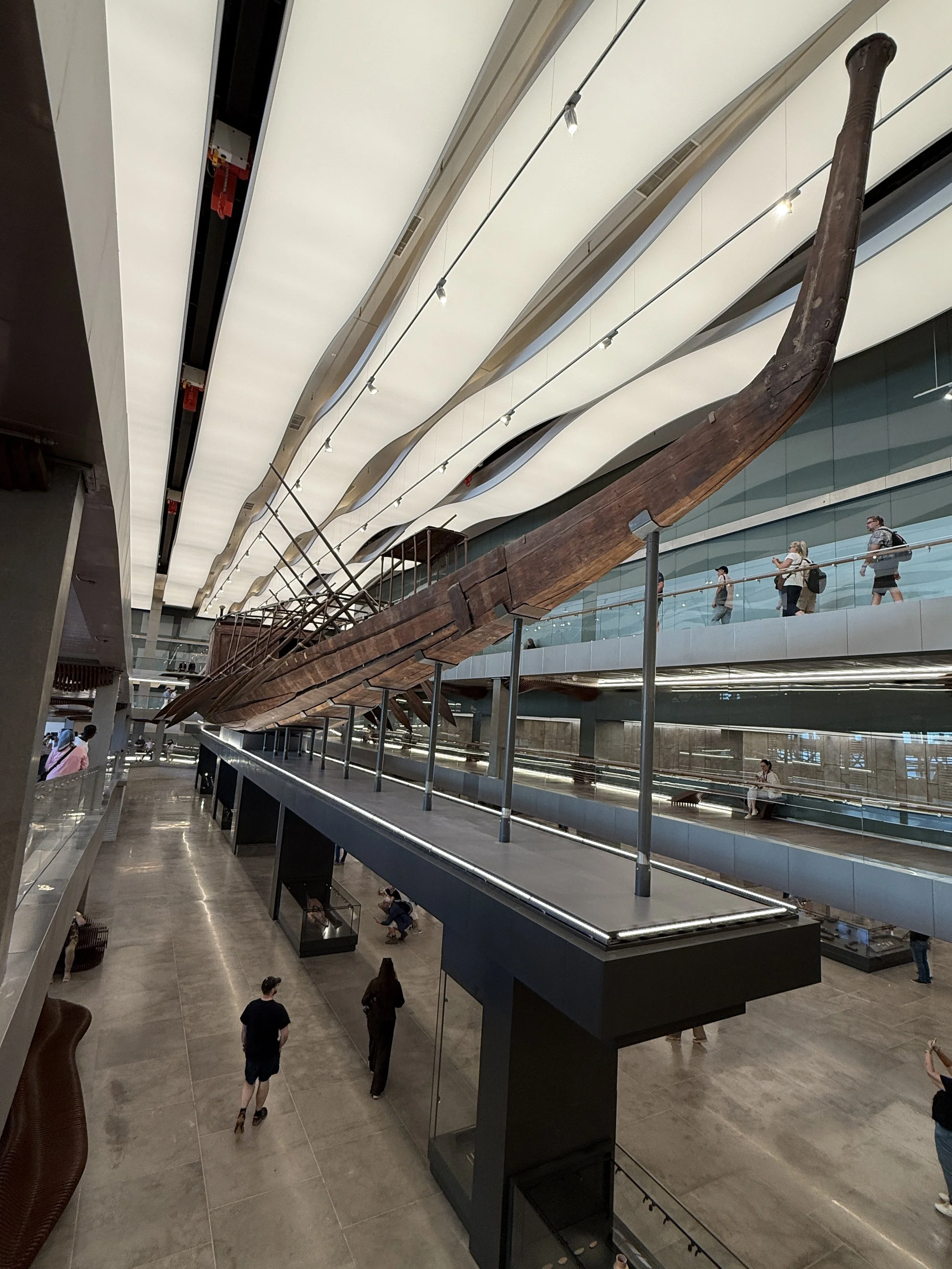
Khufu’s Solar Boat in its museum at the GEM. This picture does not do the boat or the architecture justice! (2026)
Maybe after a trip to the Pyramids you finally start to understand who Khufu was, but the next best thing to his pyramid is the boat that was buried next to it. Once you finish checking out #4’s fountain area, don’t climb the steps, but wander down the small ramp that takes a path under some large stones. Here you will see the graffiti made by the stone gangs during the building of the pyramids. This gives you a glimpse into the everyday Ancient Egyptian and realize, yep… writing “X was here” is nothing new, but ancient!
Continue up the ramp and go up the stairs on the far side of the Solar boat museum and take either the staircase or the elevator to the top floor and get out to marvel at the solar boat. This boat was originally in a museum next to the Pyramids for years and was then dramatically transported in 2021 in a special vehicle to the Grand Egyptian Museum for preservation and display along with its much more dilapidated sister ship. There is evidence it had been sailed previously, but its purpose is still speculated upon. Was this boat used as a funerary barque or merely as an offering for the sun-god to take his daily voyage across the heavens? All 1,200 pieces of the boat have been meticulously restored and reassembled for your viewing pleasure. It weighs approximately 20 tons and is 138 feet long. Across the way, visitors may see pieces of the second boat being conserved and being put on the scaffold.
The museum also contains information about the excavation of the solar boat, its conservation and purpose, so it is recommended to also walk around the bottom floor before exiting.
For some more information about the Solar boat check out Smithsonian’s coverage of the moving of the boat from the Pyramids to the museum: https://www.smithsonianmag.com/smart-news/egypts-ancient-king-khufus-boat-moved-pyramids-giza-new-grand-egyptian-museum-180978413/
#2 King Tut’s Treasures
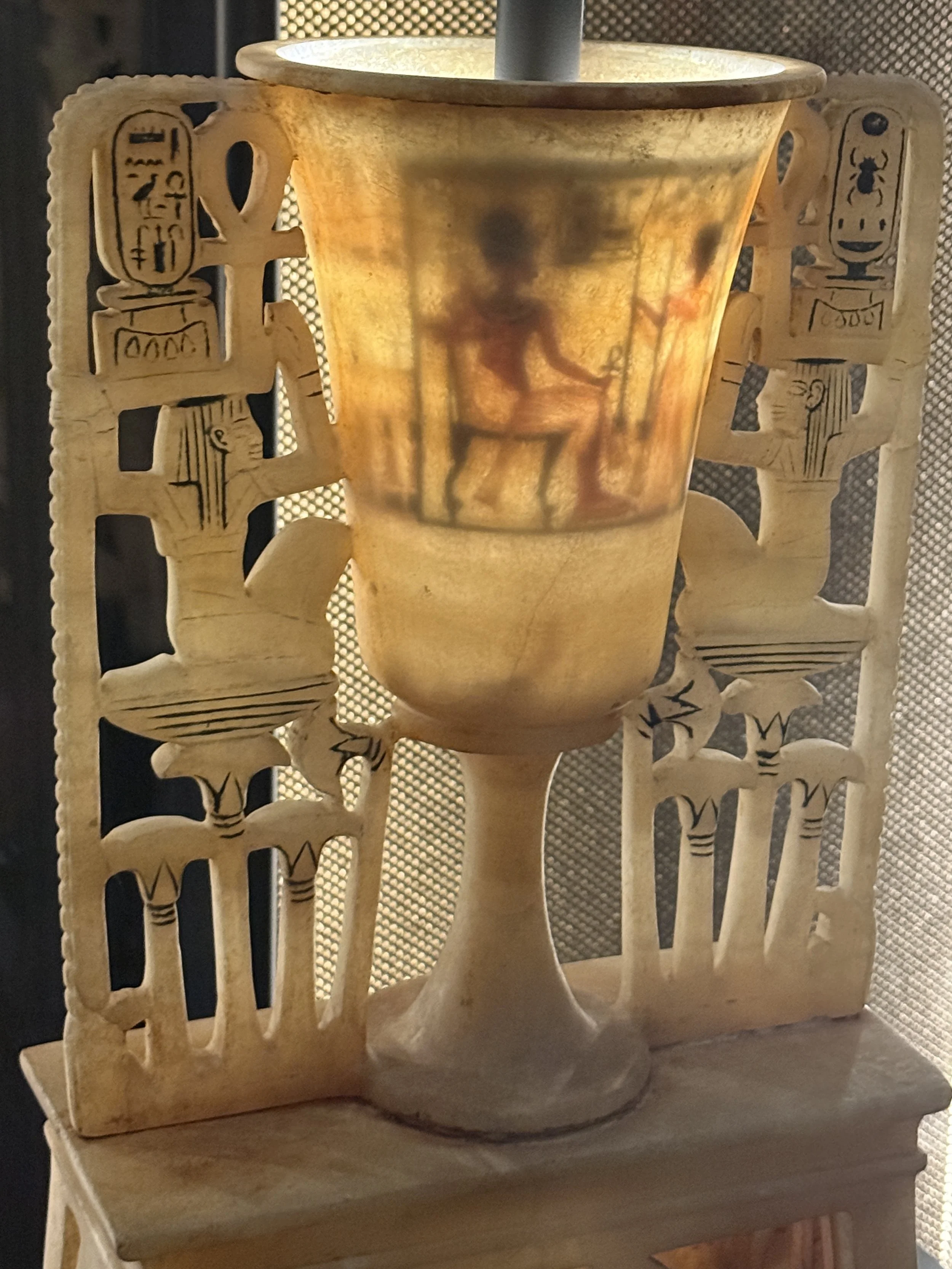
Alabaster lamp depicting King Tut and Ankhesenamun. (2026)
I would be remiss to not put these in the top 3. I might catch flak for not putting this as number one, but I have my reasons…
King Tut wasn’t an important king, but his tomb was the most important discovery of all time for Egyptologists everywhere, because you could finally understand the vast wealth that would have been buried with more important kings. Whoever managed to pack ALL of this into his TEENY-TINY tomb in the Valley of the Kings, would be crowned the true king…of TETRIS!
Naturally this guy gets his own two separate galleries dedicated to his items and then his gold in the last gallery. Take time with his clothing and alabaster items and some of these have never before been on display to the general public, including an amazing alabaster lamp that has King Tut and his wife Ankhesenamun carved on the inside and is illuminated when light is put inside. He also has a bed with actual working hinges and an umbrella! Take time with the textiles and preserved food and gods – it always blows my mind how the ancients were able to fit this all in. His mummy is on display in his tomb in the Valley of the Kings in Luxor.
His gold funerary arks or shrines that then covered a massive stone sarcophagi, which held three gilded coffins, are on display in addition to everything that was gilded in the final gallery. Eventually you will wind your way to the end of the gallery where his funerary mask is on display. You’ll get in line to see it from a 360° angle, and similar to going to see the Mona Lisa, people will be holding their cameras and phones and elbowing and taking forever to get the perfect picture.
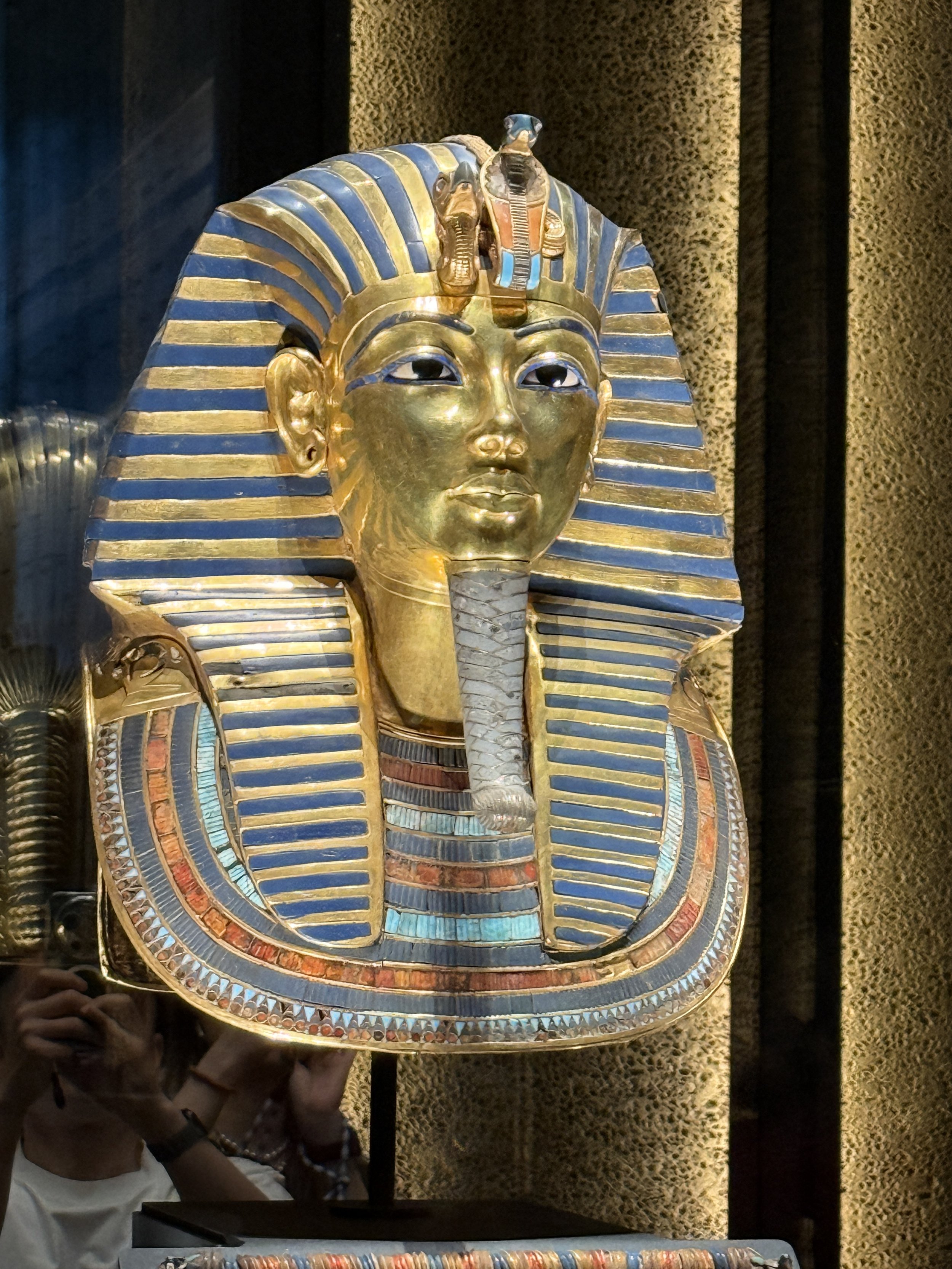
King Tutankhamun’s funerary mask at the Grand Egyptian Museum. (2026)
As you exit, you can see his throne and a few other famous items from the collection, or you can go back through the display all over again, just remember if you walk out and pass the Grand staircase, you’ll have to go back through all the galleries to get back down to King Tut’s stuff.
#1 Osiris impregnating Isis
Okay this is one of my favorite artifacts of ALL time in the Grand Egyptian Museum mostly because the description tag completely ignores the story and most of the guides get bashful telling the story. Hence, why it goes straight to number one over King Tut. Blame my dirty mind.
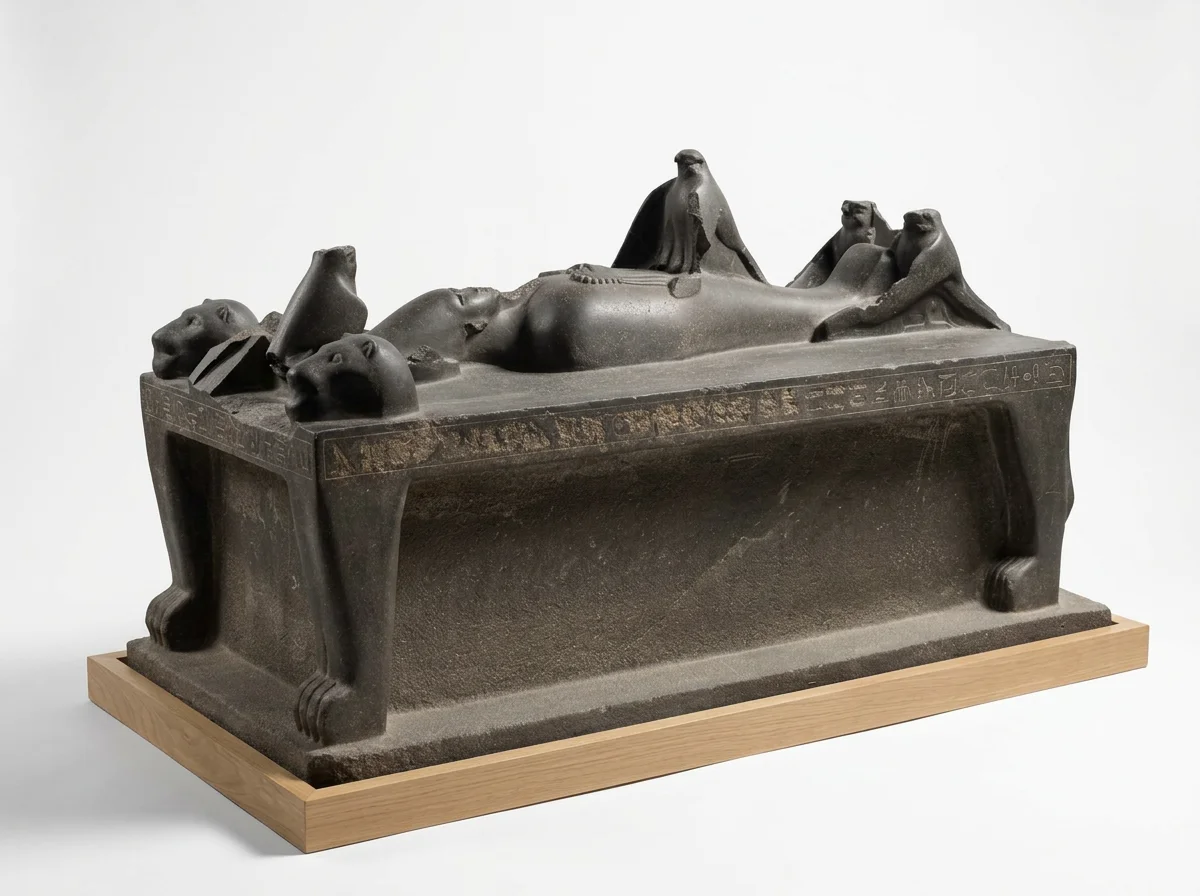
Osiris on a funerary bed with Isis (as a bird) perched on top of him on display at the GEM. Image has been edited with AI for clarity. (2026).
In the legend of Isis and Osiris in Egyptian mythology, the god Osiris is chopped up into little pieces by his evil brother god Seth and the pieces are scattered all over Egypt. Osiris’ man ‘bits’ get thrown in river Nile where it is eaten by a particular fish (Plutarch’s version of this story makes it the Nile Elephant fish and you’ll see why!). Isis, the goddess of magic and motherhood (and a bunch of other things) gets all the other pieces of her husband together and binds them together creating the first mummy. She takes a lump of clay refashioning Osiris’ missing penis and “reanimating it” – if you know what I mean. She then transforms herself into a kite and perches atop this newly reanimated member and impregnates herself with their falcon-headed son Horus. This is merely an abbreviated portion of a much greater epic of the birth of the gods, their struggles with each other that completely frame the backbone of Ancient Egyptian belief system. This statue/sculpture is into the third gallery and about a row in. You can’t miss this black granite funerary bed.
How long do you need at the Grand Egyptian Museum?
If it is your first visit to the GEM, you must spend at least 5 hours. Four hours is cutting it close because you need walking time between the parking lot, entrance, the hanging obelisk to the entrance of the Grand Hall is at least 20-30 minutes total. I’ve been on tours where we only have 3 hours and you are doing the museum at a dead sprint. If you are on a tour like that book a day before your tour starts or after it ends, because you want to have time to wander this amazing place.
There are a bagillion other artifacts to see in the Grand Egyptian Museum so take your time!
On WanderinGwyneth Adventures, we make sure to see all of these above and so much more! Subscribe to join our mailing list or sign up for one of our tours!